
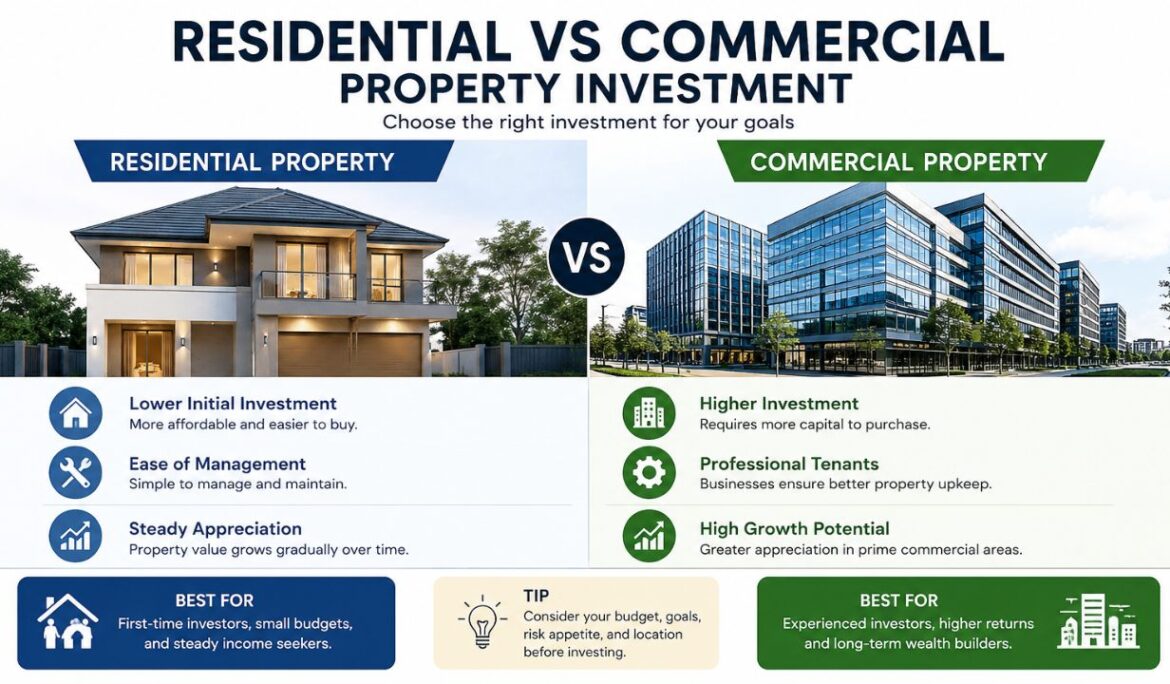
Although choosing between residential and commercial real estate can be difficult, it is among the most dependable ways to increase wealth. Every choice has advantages, hazards, and possible income. Your budget, investment objectives, and level of risk you are ready to accept will all influence your choice.
Residential Property Investment:
Residential buildings—houses, flats, and land for residential use—abound. They are mostly acquired for personal use or to supplement rental revenue.
Residential real estate has great economic advantages. Usually demanding less initial investment than commercial property, it is ideal for first-time purchasers. Demand for homes is still strong, therefore helping to shorten lengthy vacant periods. Furthermore, residential property funding options are sometimes easier to obtain.
Residential property rental income usually falls, though. Regular upkeep, tenant management–all of which can impact total returns–fall on owners as well.

Investment in Commercial Real Estate
Commercial assets include stores, warehouses, offices, and commercial sites. These assets are rented to companies rather than individuals.
Usually, commercial real estate provides higher rental income and longer lease agreements, generating more consistent cash flow. Business renters could also help with some upkeep expenses, therefore lowering the load on the landlord.
On the other hand, commercial buildings cost more to start with and could sit empty for longer if there aren’t enough qualified renters around. Additionally affecting commercial property values significantly are market conditions and economic shifts.
Which Investment Is Superior?
Your financial goals will determine the appropriate option.
Select residential property if you:
- Maintain a budget constraint.
- Want a steady rental income.
- Choose less risk for your investments.
- We are investing in long-term value growth.
Select commercial property if you:
- Have more money to invest.
- Want better rental revenue.
- Able to handle more hazards.
- Long-term corporate renters are sought.
Things to Think About
Before investing, check the property’s location, market demand, future construction plans, and your current budget. A well-placed property, whether residential or commercial, will likely increase in value over time.
Conclusion
Both residential and commercial properties present great investment opportunities. For new investors, residential real estate is ideal because it offers consistent demand, lower expenses, and minimal maintenance. Though it requires more capital and thorough organizing, commercial property provides more rental income and more return potential.
Understanding your financial objectives and looking at the local market will enable you to select the best investment to help you succeed over the long run.